I've seen draws kicked back for a notary stamp that expired two days before signing. I've seen a $400,000 disbursement held up for three weeks because one subcontractor's lien waiver was off by $12.50. And I've watched a GC lose a subcontractor — a good one — because the third consecutive late payment made the sub walk to a competitor's project.
Draw rejections are not rare events. Incomplete or erroneous submissions are the number one cause of draw delays across the industry. The majority of these rejections are paperwork and clerical errors, not disputes about whether the work was done. That makes them preventable. But "preventable" and "prevented" are not the same thing.
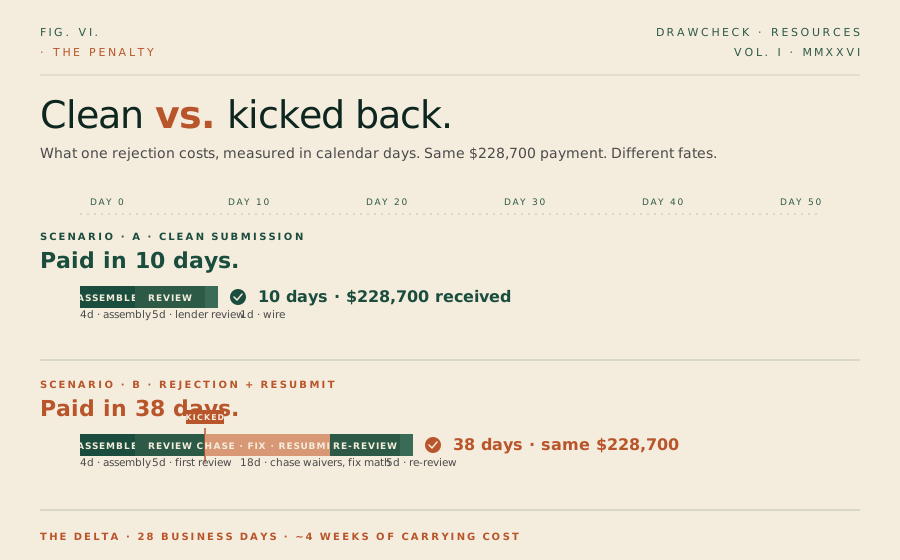
What a Rejected Draw Actually Costs You
Time. A rejected draw adds a minimum of 1–2 weeks to the payment cycle. 47% of construction professionals say late payments extend their project timeline by 1–2 weeks. Almost 30% report delays of 3–6 weeks. The industry average from work completion to payment receipt is 83 days — the longest of any industry in the U.S.
Money. Contractors finance more than 54 days of accounts receivables on average. 95% of GCs float payments while waiting for disbursements. Average GC net income before tax is approximately 6.9%. On industrial and nonresidential work, it drops to 4.1%. A few weeks of carrying cost on a delayed draw can eat the entire profit margin.
Subcontractor relationships. When your draw gets rejected, you cannot pay subs. 86% of subcontractors cover labor expenses out of pocket while waiting. One in three pulls from personal or retirement savings. 100% of subcontractors now consider a GC's payment reputation when deciding whether to bid.
Legal exposure. Repeatedly submitting deficient draw packages can constitute breach of contract. It can affect your bonding capacity. And if a sub files a mechanics lien — which happens over 90,000 times a year nationally — the property title gets clouded and future draws stop.
The Top 10 Reasons Draw Requests Get Rejected
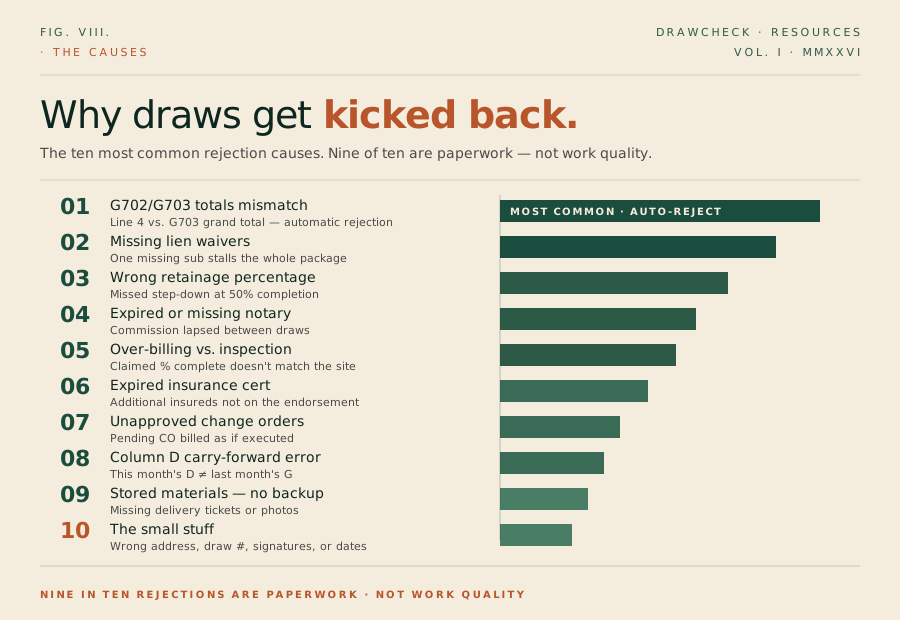
1. Math Errors on the G702/G703
The most embarrassing and most common error. The G703 continuation sheet totals do not match Line 4 of the G702 cover sheet. A budget of $500,000 with a first draw of $150,000 that shows $360,000 remaining instead of $350,000. These get caught instantly.
2. Missing Lien Waivers
The single most frequently cited cause of draw delays. Lenders will postpone the entire draw until all lien waivers are received. One sub's missing conditional waiver — even from a small supplier — can freeze payment for every other sub on the project. Before automation, 85% of lien waivers were returned with incorrect data.
3. Overbilling
Billing for more work than has been completed. The lender's draw inspector visits the site, compares your G703 percentages against observable progress, and reports back. If you claim electrical rough-in is 100% complete but the inspector sees 70%, the draw gets rejected or revised downward.
4. Document Mismatches
Every number must reconcile across every document in the package. The G702 must match the G703. The sworn statement must match the invoices. Waiver amounts must match invoice amounts. If one number contradicts another number anywhere, the entire submission is suspect.
5. Unapproved Change Orders
Only approved change orders can be included. The original contract sum on the G702 (Line 1) must never be modified. Change orders adjust Line 2 and appear as separate line items on the G703.
6. Expired Insurance Certificates
Every active sub needs current coverage — commercial general liability, workers' compensation, commercial auto, umbrella/excess liability, and builders risk. An expired certificate, even by one day, stops the draw.
7. Missing or Invalid Notarization
The Contractor's Sworn Statement must be notarized. The G702 contractor signature must be notarized per AIA instructions. An expired notary commission invalidates the document.
8. Wrong Waiver Types or Non-Compliant Forms
Twelve states mandate specific statutory lien waiver forms. Using a generic form in California renders the waiver legally void. Subs confuse conditional and unconditional waivers. The wrong form means no valid waiver, which means no disbursement.
9. Stored Materials Without Backup
Billing for materials not yet installed requires vendor invoices, delivery tickets, date-stamped photographs, and for off-site storage, additional documentation. Missing any piece gets the stored materials claim zeroed out.
10. Administrative Errors That Should Not Happen But Do
Wrong draw period dates. Wrong project address. Missing signatures. Wrong draw number references. Individually absurd. Collectively responsible for more delays than any single catastrophic error.
How to Self-Audit Before Submitting
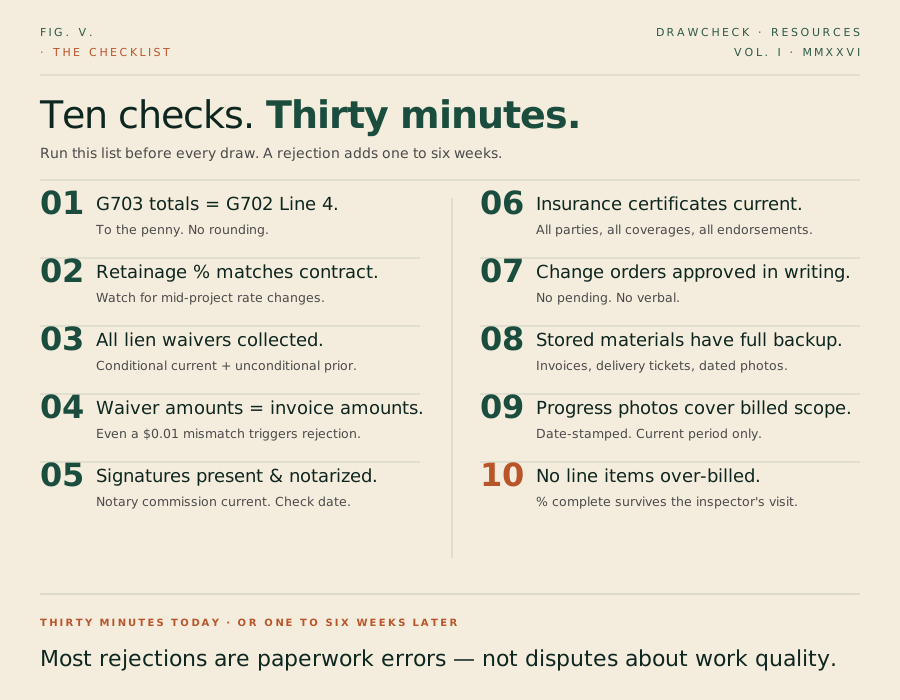
Cross-reference the money:
- G703 Column G grand total matches G702 Line 4
- G702 Line 3 = Line 1 + Line 2
- G702 Line 8 = Line 6 - Line 7
- Retainage percentage matches the contract on every line item
- Previous payment amounts on G702 match owner's records
Check every sub:
- All active subs have submitted invoices
- Each invoice has a conditional waiver for the current period
- Each invoice has an unconditional waiver for the prior period
- Waiver amounts match invoice amounts exactly (to the penny)
- Waiver forms comply with state requirements
Verify the paperwork:
- All signatures present and legible
- Notary commissions current
- Insurance certificates current for all parties
- Progress photos date-stamped and covering billed scope
- Change orders approved in writing before inclusion
- Stored materials have complete backup documentation
- Billing period dates consistent across all documents
This takes an hour. A rejection takes weeks.
Get a second set of eyes.
Self-auditing works when you have time and discipline. But most GCs assemble draw packages under deadline pressure, juggling field issues and sub coordination simultaneously. That is the environment where a $12.50 waiver discrepancy slips through and freezes a $400,000 payment.
This is exactly what DrawCheck does. We review your complete draw package — G702/G703, lien waivers, sworn statements, insurance certificates, stored materials documentation, sub invoices — and flag every error before the lender ever sees it. Flat fee. 24-hour turnaround. One review that prevents weeks of back-and-forth.
Get Your Draw Checked →Or write to info@drawcheck.co